...

Browse Air Conditioning Suits

PRIVATE LABEL & BULK SOURCING

Water-Circulation Cooling Vest

A frozen pack chills water in a dedicated container. A pump circulates that water through the vest, while two rear fans assist airflow.

  • Water circulation for primary cooling
  • Two rear fans for auxiliary airflow
  • Garment and kit scope confirmed with your quote

Choose the requirements to discuss. Available options and proposed changes are reviewed for the selected configuration.

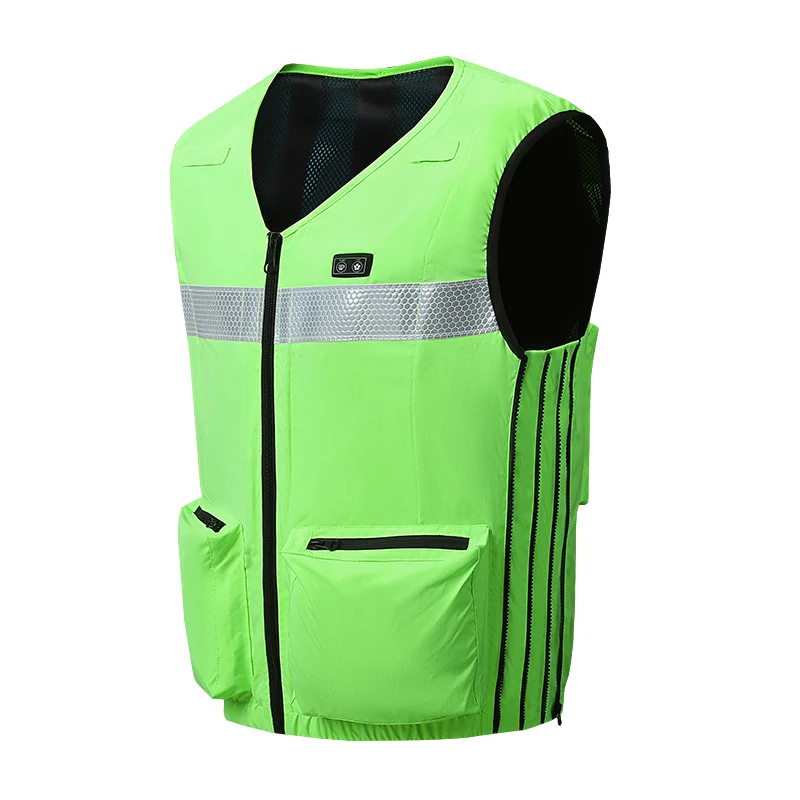
Front view of the fluorescent green water-circulation cooling vest with reflective strip and chest control panel
Front view
Rear view of the fluorescent green water-circulation cooling vest with two fans and a back pouch
Rear view — twin fan positions

Base model, front and rear. The two rear fans are visible in the back view.

START WITH THIS MODEL

Base Model & Specifications

Review the photographed base model first. Share your intended fit and component requirements when requesting a sample or quote.

See the Base Model

Base Specifications

The table describes the photographed garment and cooling system. Your quotation confirms which components and quantities are supplied.

Review areaFor this model
GarmentSleeveless V-neck vest with a front-centre zip
Adjustable fitOne adjustable size, M–2XL, using the side zippers. See the four fit settings.
Primary coolingWater circulates through channels beneath the mesh on the photographed sample. See the channel areas.
Cold sourceFrozen cooling pack in a dedicated container
Auxiliary airflowTwo standard rear fans
Visible constructionMesh lining, lower zip pockets and silver-coloured bands

How Water Circulation Cools the Vest

The frozen pack stays in a dedicated container and cools the water. Water flows to the pump, through the garment's water circuit, then returns to the water in the container. The frozen pack does not enter the water circuit. Dedicated cooling container Frozen cooling packstays in this container cools the water Circulating water cooled water ↓ Water pump Garmentcircuit Return water

Conceptual flow only. Hardware shape, position and exact tube routing are not illustrated. Dashed arrow: cooling relationship. Solid arrows: water flow.

The frozen pack stays inside a dedicated container and chills the water. The pump sends the cooled water through the garment’s water circuit and back to the container. The two rear fans assist airflow.

Before ordering: confirm how you will freeze and replace compatible packs, what power is available, and how the configured vest will be worn.

15-SECOND PRODUCT ANIMATION

See the Cooling Cycle

Rear view of the EVERLANDA water-circulation cooling vest

15-second animation. Highlighted paths are illustrative; they do not show the exact tubing layout or measured cooling. See the actual sample assembly.

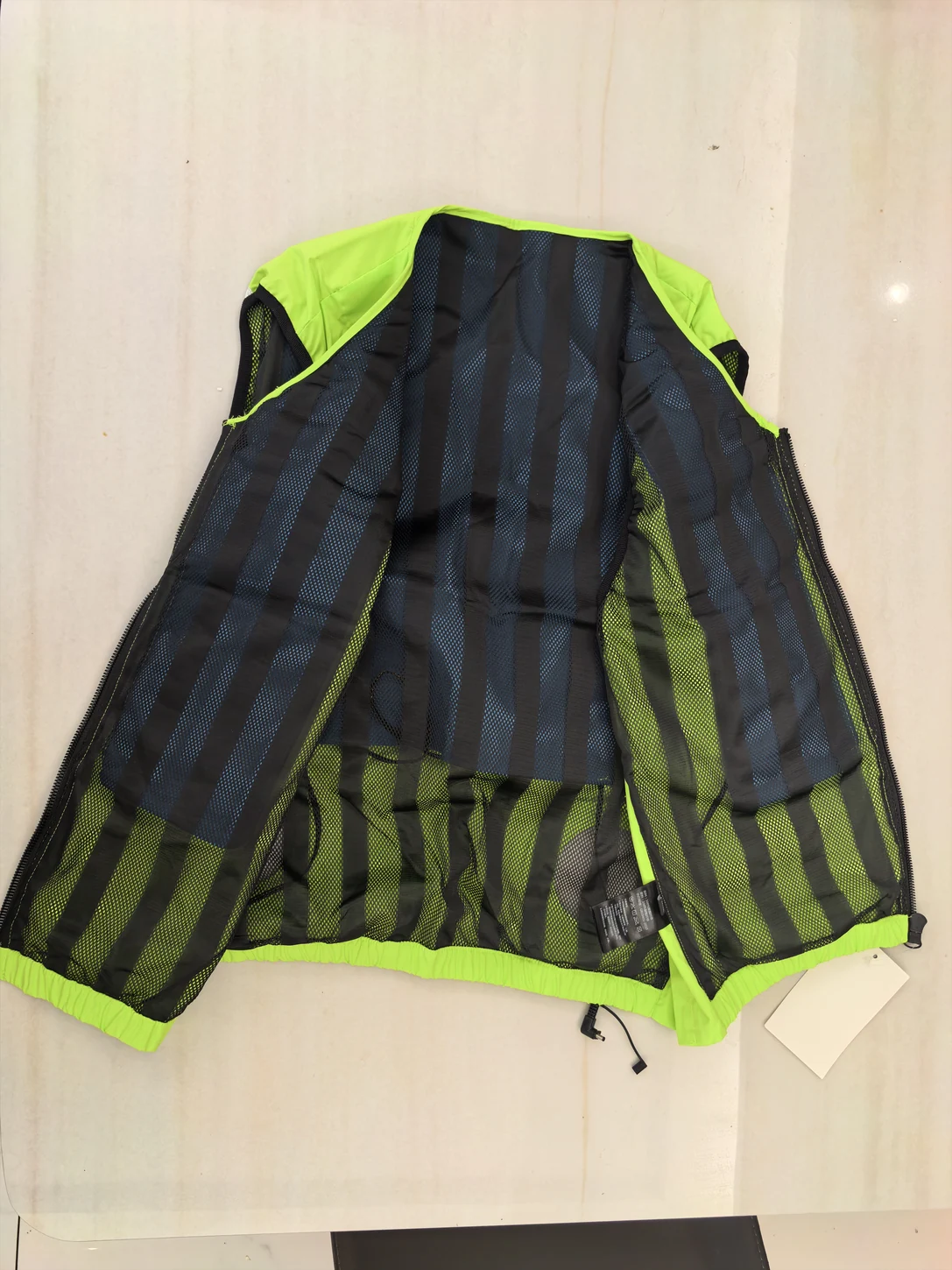
Open vest showing blue water-channel areas behind the mesh on the front panels and back
Open sample with numbered water-channel areas.

Sample photographs

Where the Water Channels Are Visible

Blue water-channel areas are visible beneath the mesh on both front panels and across the back of this sample. The numbers identify areas shown in the photograph.

  1. Front panel at left in the photo
  2. Upper back
  3. Main back panel
  4. Front panel at right in the photo
Blue water-channel layer visible beneath the black mesh lining
Close-up of the blue water-channel layer beneath the mesh.

COLD-SOURCE REPLACEMENT REFERENCE

Plan Frozen-Pack Changes

About one hour is a planning reference for changing one frozen pack. The actual interval depends on the pack and conditions. Plan access to freezing and confirm compatible spare packs if you need to rotate them.

Battery runtime is confirmed separately for the selected power supply, components and settings.

What Will Your Quote Include?

Tell us whether you need the garment, a coordinated kit, or a custom configuration. Your quotation should identify each component, its quantity and whether it is included, optional or supplied separately.

ComponentReference or enquiry itemConfirm in your quote
GarmentSleeveless V-neck base vest with a front zipConfirm garment version, sizing, branding and quantity.
Rear fansTwo rear fans shown on the photographed vestConfirm quantity, mounting, connectors and matching power.
Water-cooling componentsContainer, frozen pack, pump and garment water circuit. See sample components.Confirm which components and compatible packs are included.
Power, cables and sparesBattery, charger, cables and spare packs as requestedConfirm model, quantity, compatibility and separate supply.

Compare the itemized quote against the sample and packing list before approving the order. Request written confirmation for changes to the pack, pump, fans or power.

Match Fans, Connectors and Power as a System

Water-circulation cooling vest — fan view, supplied product photo
Actual rear fan close-up. Review mounting and connector compatibility for the intended configuration.

If you want a different fan configuration, check mounting dimensions, connectors, cables, the battery and controller together. Identify potential compatibility issues during sampling and record the agreed component specifications for order inspection and future spare-part enquiries.

Tell us what you want to evaluate

  • Garment-only sourcing or a kit with matching fans
  • Airflow, noise, weight and operating requirements
  • A specified fan, mounting size, connector or control requirement
  • Replacement-part identification and future replenishment
Configuration decisionProcurement review
Base configurationTwo rear fans in the positions shown. The photographed garment opening is approx. Ø9 cm. Confirm fan housing and mounting dimensions separately.
Matching optionsAsk for the compatible fan and power combinations that can be supplied with the selected garment.
Changes requiring reviewDifferent fan dimensions, quantity or position may affect openings, garment construction, wiring and weight. Review the battery and controller at the same time.
Sample & quotationProvide component information where available. Agree fit, operation checks, spare-part supply, sample costs, MOQ and timing for the proposed configuration.

Configure the Water-Cooling Kit Around Your Use Conditions

Consider the container, cooling packs, pump, water circuit, carrying arrangement and spare packs together. Assess wearing needs, expected use periods and access to freezing to judge whether the proposed setup fits your project.

Existing compatible options, changes requiring adaptation and new development requests are confirmed separately.

Water-Cooling Components on the Sample

These photos show the pump, hose fittings and one measured cold pack. Confirm compatible parts and quantities in the itemized quote.

Sample pump with two clear hoses photographed on the vest
Sample pump with two clear hoses.
Two blue hose fittings and clear tubing at the rear opening of the vest
Clear tubing and blue fittings at the rear opening.
Tape measuring the width of the rigid cold pack on the sample vest
Cold pack: approx. 15 × 9.5 × 2.5 cm (length × width × body thickness). The photo shows the width.

Match the kit to the use conditions

Review areaFor this model
Cold source & containerThe photographed cold pack measures approx. 15 × 9.5 × 2.5 cm. Confirm compatible pack dimensions, container capacity and carrying arrangement. Plan the number of spare packs separately.
Pump, power & connectorsReview the pump, matching power supply and connection information as a system.
Water circuit & fixingThe base model circulates water through the garment’s water circuit. Proposed routing, coverage or fixing changes need structural and sample review.

Existing match or new development?

Ask for identified compatible components for this garment. Changes to the circuit, container structure, carrying position or disassembly method may require development and a new sample.

Agree the filling, drainage and frozen-pack replacement instructions for the final configuration. Spare-pack quantities, component compatibility, sample/development costs, MOQ and lead time form part of the quotation.

Match the Power & Controls

Water-circulation cooling vest — panel view, supplied product photo
Chest-mounted control panel on the supplied garment. Review the instructions for the selected components.

Changing a fan, pump or connector can affect the power and control arrangement. Agree the matched combination before approving the sample.

  • Battery voltage, capacity basis, Wh and connector specification
  • Charging arrangement, battery fixing and carrying position
  • What each button controls, settings and any independent operation
  • Runtime record: battery, active components, setting, conditions and stopping point

Cold-source replacement time and battery runtime are separate specifications. The around-one-hour cold-source reference is not a battery-runtime figure.

Confirm Fabric, Trims and Fit Together

Discuss changes to the outer fabric, mesh lining, zip, pockets, binding and component fixings against the actual garment construction. Use swatches, specifications and a wearing sample to assess materials, fit and component placement together.

Water-circulation cooling vest — fabric view, supplied product photo
Outer fabric close-up — actual supplied photograph.
Water-circulation cooling vest — mesh view, supplied product photo
Mesh lining close-up — actual supplied photograph.
Material & roleSelection & change review
Photographed sample labelShell and lining each labelled 100% polyester. Confirm the material specification for your order.
Outer fabric / shellSpecify composition, weave/structure, weight basis, colour and any buyer-required performance. Review the effect on garment shape, seams and component support.
Mesh lining / interiorDiscuss composition, feel, mesh structure and how the lining works with fixing points and the wearer.
Buyer-specified materialProvide a swatch or material specification. Agree a trial sample, sewing/fixing checks, test needs, price, MOQ and timing for the change.

Agree any available substitute by its actual specification and approved swatch. A request to change fabric is assessed against the final garment and component configuration.

Trims & Construction Details

Water-circulation cooling vest — zip view, supplied product photo
Front-centre zip

Front fastening

The sample centre-front zipper measures approx. 46 cm from the top stop at the base of the V-neck to the bottom stop. Check operation and seam finish on the sample; a material or opening change may affect sewing and price.

Water-circulation cooling vest — band view, supplied product photo
Silver-coloured band and rear opening

Silver-coloured bands

Discuss band width, position and any required performance. Agree the actual specification and evidence for any reflective claim before sample and order approval.

Water-circulation cooling vest — pocket view, supplied product photo
Lower zip pocket

Lower pockets

One lower front pocket on the sample measures approx. 20 cm across the upper outer seams, with a 16.5 cm zipper opening. Position or capacity changes need review with the garment pattern and component arrangement.

Water-circulation cooling vest — chest view, supplied product photo
Shoulder pen loop and control-panel area

Pen loop & panel area

Review loop size, attachment and control access. Branding and trim changes must work with these positions.

Water-circulation cooling vest — lining view, supplied product photo
Inner garment structure

Interior & component fixing

Review edge finish, reinforcement and support for the agreed components. New fixing or access arrangements require sample assessment with the water circuit and fans.

See measured zippers and pockets
Tape following the front zipper from the V-neck base to the bottom stop
Centre-front zipper between stops: approx. 46 cm.
Tape beside the lower front zip pocket and stitched surround
Measured lower front pocket: upper outer seams approx. 20 cm; zipper opening approx. 16.5 cm.
Tape across the outside lip of the large rear pouch
Large rear pouch, across its flexible outer lip as shown: approx. 32–33 cm.
Tape below the small black T-pull zipper
Upper rear zipper, across the visible black strip: approx. 17.5 cm.

Confirm trims and sewing requirements in the approved sample and inspection checklist.

For each proposed trim change, agree the specification, material compatibility, sample acceptance, costs, MOQ and timing. Label and packaging requirements are coordinated in the branding review.

Sizing & Wearing Guidance

One Adjustable Size, M–2XL

This vest has one adjustable size. The supplier identifies four fit settings using the side zippers.

Side-zip positionFit setting
Fully zipped closedM
One expansion strip exposedL
Two expansion strips exposedXL
Fully unzipped / fully expanded2XL

Measurements by Fit Setting

Measurement (cm)MLXL2XL
Chest circumference108118123128
Hem circumference90100105110
Armhole measurement545961.564

The measurements above refer to the four adjustment settings of the same garment. Garment length is 64.5 cm. Manual measurements can vary by 1–3 cm depending on the method. Confirm finished measurements and tolerances for your order.

Adjust the Side Zips to Check Your Fit

Choose the side-zip setting that suits the wearer. Review the approved sample with your intended clothing layers and installed components before confirming the order.

Rendered rear wearing view of a fluorescent green water-circulation cooling vest with two rear fans
Rendered wearing reference, rear view. Confirm fit and component placement on the approved sample.

Testing & Verification

What a test record should confirm

Check the exact garment and components, frozen pack, battery and operating mode, ambient conditions, measuring points and test method. Assess cooling, frozen-pack replacement and battery runtime as separate results. Ask for the record for your proposed configuration.

MATCH EVIDENCE TO THE CONFIGURATION

Ask for the conditions behind the result.

Request model-specific records for cooling, cold-source duration, fan airflow and noise, battery runtime, care and sealing. When components, fabrics or construction change, agree which checks need to be repeated on the proposed sample.

The around-one-hour cold-source figure is a use reference. Review the selected pack, environment and measurement method when assessing it.

A useful test record identifies

  • Model and complete component configuration
  • Frozen pack, battery and operating mode
  • Ambient conditions and measurement position
  • Method, time interval and stopping criterion
  • Recorded result and supporting photographs

See the Sample Assembly

Actual sample footage shows a rear fan being fitted, connections being assembled and the front control panel being handled. Confirm the exact components and controls for the configuration in your quotation.

OEM, Private Label & Sample Approval

Agree Branding and Packaging on the Sample

Share your logo artwork and preferred position, plus requirements for labels, hangtags, instructions or packaging. EVERLANDA coordinates the review of the garment and components against the sample and quotation scope.

Water-circulation cooling vest — chest view, supplied product photo
Supplied chest and shoulder detail. Branding placement is reviewed around the controls, zip, bands and pen loop.

What to Prepare for Sample Review

  • Logo artwork, location and finished size
  • Labels, packaging and instructions required for your market
  • Target garment configuration, adjustable fit requirements and approximate order quantity

Review the method and location for this material and configuration. Heat transfer, embroidery or patches can be specified as buyer requirements; the selected process is agreed after feasibility and sample review.

DecisionWhat to establish
Base garmentUse the actual garment and component positions to define the branding area.
Options & proposed changesAsk which methods and label or packaging formats can be supplied for this order. Changes to materials, component markings or structure require separate review.
Quote & sample approvalAgree the artwork, placement, process, sample/development costs, MOQ, sample timing and bulk-order conditions in writing.

Production, Quality & Packing

See the garment workshop and review what to check before shipment. For this cooling vest, EVERLANDA coordinates the approved sample, component list and production requirements with the selected supplier.

Garment Production Scenes

Six views of general garment production, from fabric preparation to garment handling and the overall workflow.

Rows of wrapped fabric rolls stored in a garment workshop
Fabric storage
A worker guiding a cutting machine through stacked fabric
Fabric cutting
Workers guiding fabric through a spreading machine
Fabric spreading
A worker operating garment pressing equipment beside hanging clothing
Garment pressing
Illustration of two workers at a garment workbench with a fluorescent green KD116 cooling vest
KD116 at a workbench (illustration)
Workflow illustration over a garment display, from requirements and sampling to production, inspection and dispatch
Garment production workflow

What to Check on the KD116 Cooling Vest

Use the approved sample and agreed specifications as the reference for your order.

Hands fitting a rear fan to the fluorescent green cooling vest sample
Cooling vest sample assembly

Confirm Before Shipment

  • Check garment measurements and the supplied parts list.
  • Check fan mounts, hose fittings and power connections.
  • Agree which pump and fan operating checks to run.

Workshop & Equipment

A look at general garment workshop facilities and equipment.

Garment production floor
Garment handling station
Garment folding station
Garment staging area
Carton staging aisle
Illustration of a worker at a sewing machine with a green KD116 cooling vest
KD116 at a sewing station (illustration)

Confirm How the Order Will Be Packed

Use the itemized quotation and packing list to agree the packing details for your configuration.

Archived packing and dispatch examples from general garment orders.

Cartons staged for dispatch
Garment folding before packing
Garment facility overview
Cartons loaded into a container
Carton handling during loading
Shipping container at dispatch

Items to Confirm

  • Garment and accessory counts
  • Labels and instructions
  • Carton quantities and markings
Review what your quote can include

Archived Certificate & Audit References

These documents apply to the suppliers, facilities or materials listed on them. Ask us which current documents apply to your cooling vest configuration and destination market.

Archived OEKO-TEX STANDARD 100 certificate issued to the SBS zipper supplier
SBS zipper supplier · OEKO-TEX STANDARD 100 · expired October 2024
Archived SMETA factory audit report from August 2023
SMETA factory audit report · August 2023 · archived copy
Archived amfori BSCI facility audit extract
amfori BSCI facility audit extract · expired July 2024
Archived Global Recycled Standard facility scope appendix
Global Recycled Standard facility scope appendix · archived copy

From Sample Approval to Order Inspection

Agree a written approval and inspection plan with our procurement coordination team. Inspection coverage, third-party involvement and fees are confirmed for the order.

01 / Approve

Confirm garment sample, component configuration and supply list.

02 / Coordinate

Agree production requirements and document any changes.

03 / Inspect

Review garment appearance, measurements, components, controls and connections.

04 / Pack

Check agreed accessories, packaging labels and the packing list.

Inspection scopeItems to agree
GarmentCheck measurements, appearance, fabric and trims against the approved sample.
Functional componentsVerify fan, pump and control panel models and connections against the approved component list. Check assembly and operation as agreed.
Complete kitCheck accessory quantities, labels and packing against the itemized quotation and packing list.

Cleaning, Maintenance & Spare Parts

GARMENT-BODY CARE

Remove the fans and battery first.

Garment-body cleaning uses soaking and wiping only. Remove the fans and battery first, and obtain the complete preparation instructions for the remaining components before soaking.

Get the complete system instructions

Obtain model-specific preparation, drainage, cleaning, drying and storage instructions for the pump, controller, container and water circuit before cleaning.

Plan replacement support

Discuss garment parts, fans and pump, battery and controller, and water circuit and container separately. Confirm compatible replacement parts and service conditions for your order.

Frequently Asked Questions

How does the water-circulation cooling vest work?

A frozen pack cools the water in its container. A pump circulates the water through the garment and back to the container. The pack stays in the container, while two rear fans assist airflow.

See where the channels are visible in the sample.

How often should I change the frozen pack?

About one hour is a planning reference for one pack. The actual interval depends on the pack and conditions. Plan how you will freeze and rotate compatible packs.

How long will the battery run?

Battery runtime is separate from the frozen-pack interval. Confirm it for the selected battery, powered components and operating settings.

What comes with the quoted kit?

Request an itemized quote for the garment and any fans, water-cooling components, battery, charger, cables or spares. Confirm the quantity and whether each item is included, optional or separate.

Can the fans, pump or frozen packs be changed?

Share the parts or operating requirements you want to evaluate. Mounting, connectors, electrical compatibility and cooling components should be reviewed together.

How do I confirm garment size and wearing weight?

This vest has one adjustable size. Fully closed side zippers correspond to M; one expansion strip exposed to L; two exposed to XL; and fully open to 2XL. See the side-zip fit settings and reference measurements. Confirm finished measurements and dry or assembled weight for your order configuration.

Can I add my branding and arrange a sample?

Share your artwork, placement, labels and packaging requirements. The sample scope, fees, timing and minimum order quantity are confirmed for the project.

How should I clean the vest and order spares?

Remove the fans and battery. The garment body is cleaned by soaking or wiping. Before cleaning, obtain the instructions for preparing the other components. Confirm spare-part compatibility for your configuration.

Request a Quote or Discuss a Sample

Share your intended use, approximate quantity and any branding or component changes. Tell us whether you are evaluating a sample or planning a bulk order.

You can begin with a sample or project enquiry even if some details are still undecided.

EVERLANDA will discuss the proposed configuration, component compatibility, sample requirements and quotation scope with you. Available options, costs, MOQ and timing are confirmed for the agreed setup.

Purchasing topicWhat your enquiry can cover
Samples & order termsDiscuss sample requirements, MOQ, the adjustable M–2XL fit and any mixed-colour order.
Timing & logisticsAgree sample and bulk lead times, packaging, shipping and service conditions.
Quotation scopeConfirm all included, optional and excluded components and their quantities.
Doya Zeng — EVERLANDA

Doya Zeng

Procurement Coordination & OEM / ODM Project Support

Your Enquiry

Share a few details to request a quote or sample.

Water-Circulation Cooling Vest · This model

Your details are used to respond to this enquiry. Privacy Policy.

Enquire about this model

Share a few details to request a quote or sample.

Water-Circulation Cooling Vest · This model

Privacy Policy · doya.zeng@everlanda.com

We will contact you within 1 working day. You can also reach us directly at doya.zeng@everlanda.com.

Seraphinite AcceleratorOptimized by Seraphinite Accelerator
Turns on site high speed to be attractive for people and search engines.